For Parents
The education children carry with them.
School teaches children many things. But growing up asks for more.
Growing up asks
How to handle emotions. How to make decisions. How to understand money. How to navigate technology. How to build healthy relationships. How to find their voice. How to become someone they can trust.
What your child develops
Eight ways your child grows.
-
01
Understand yourself.
Wellbeing & Inner Strength
-
02
Stay safe.
Personal Safety & Healthy Relationships
-
03
Think clearly.
Thinking, Reasoning & Decision Making
-
04
Use technology wisely.
Digital Intelligence, AI & Responsible Technology
-
05
Understand money.
Money & Entrepreneurship
-
06
Communicate and lead.
Leadership & Life Design
-
07
Contribute.
Citizenship, Community & Sustainability
-
08
Respect human dignity.
Equality & Human Dignity
A two-minute check
Is your child ready for life?
Seven everyday situations, two minutes. There are no wrong answers. Your answers are not saved; we only count which results come up.
What we noticed
Your child seems well on their way. Growth Universe keeps that growing, across all eight dimensions, one month at a time.
A journey, not a comparison
Four journeys. One child, growing.
Your child isn't being compared to another child. They're growing through a journey appropriate to their developmental stage.
Growth looks like this
A child can name what is happening — and say one thing they can do about it.
Notice it. Name it. Know one thing to do.
Growth looks like this
A child can answer, give a reason, and use the idea once in a real situation.
Ask why. Give a reason. Try it once.
Growth looks like this
A student can respond, reason, apply it to the situation in front of them — and weigh what pulls in another direction.
Take a position. Reason it through. Weigh the other side.
Growth looks like this
A student can name the idea, show the evidence, put it to use — and recognise where its limits lie.
Examine the evidence. Choose your direction. Know its limits.
What a Growth Universe experience feels like
Not a lecture. An experience.
A story becomes a question. A question becomes an experience.
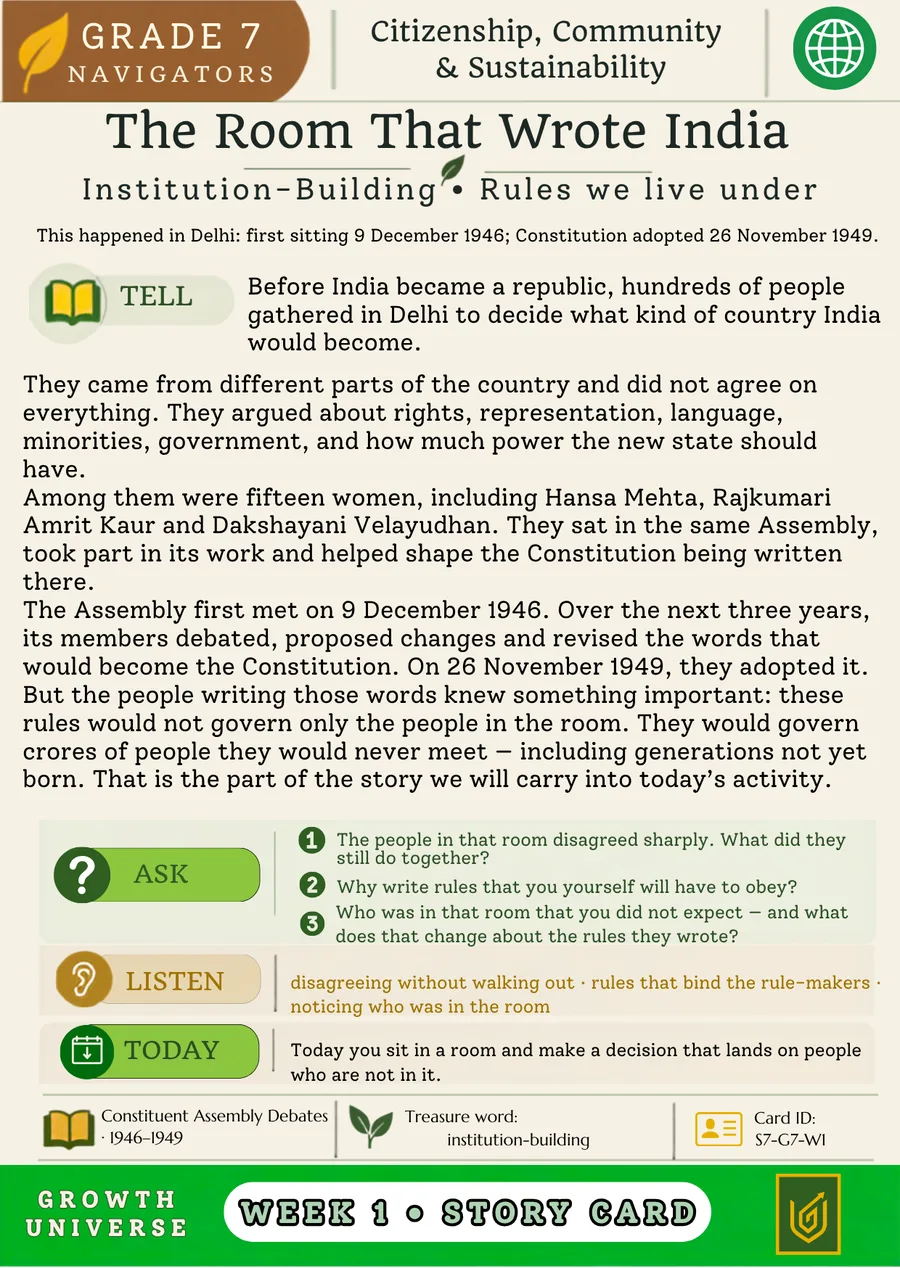

What parents receive
A window into your child's growth.
Parents shouldn't have to guess what their child is learning beyond the textbook. Through Growth Universe, families receive age-appropriate opportunities to understand and support the journey.
A view of what their child is learning
Understand the ideas, skills and experiences being explored.
Home experiences
Simple activities and conversations that extend learning into everyday life.
Reflection prompts
Questions that help parents have meaningful conversations rather than test their children.
Progress updates
Age-appropriate insights into participation, developing capabilities and areas of growth.
Practical ways to support
Suggestions for turning everyday moments into opportunities for learning.
Your child sees their own journey too: they reflect on experiences, record what they noticed, set personal goals and see how their thinking changes. The goal isn't to tell a child who they are. It is to help them discover who they are becoming.
Not a report card on personality.
Growth Universe is not designed to tell a parent
“Your child is an 82% empath.”
Human development is richer than that.
Instead, we help families notice
What is emerging?
What is strengthening?
What can be practised next?
Roots and range
Roots that help children meet the future.
Growth Universe draws from Indian Knowledge Systems and India's intellectual and philosophical traditions, bringing timeless questions into a world children are growing up in today.
We believe children can be both deeply rooted and genuinely future-ready. The goal is not to make children memorise ancient ideas. It is to give them ideas worth thinking with.
- They can learn from the wisdom of the past while thinking critically about the future.
- They can understand tradition without being limited by it.
- They can carry values forward while finding their own answers.
Roots are not about looking backwards. They are about knowing what you stand on as you move forward.
At home
Small moments. Meaningful conversations.
Each week
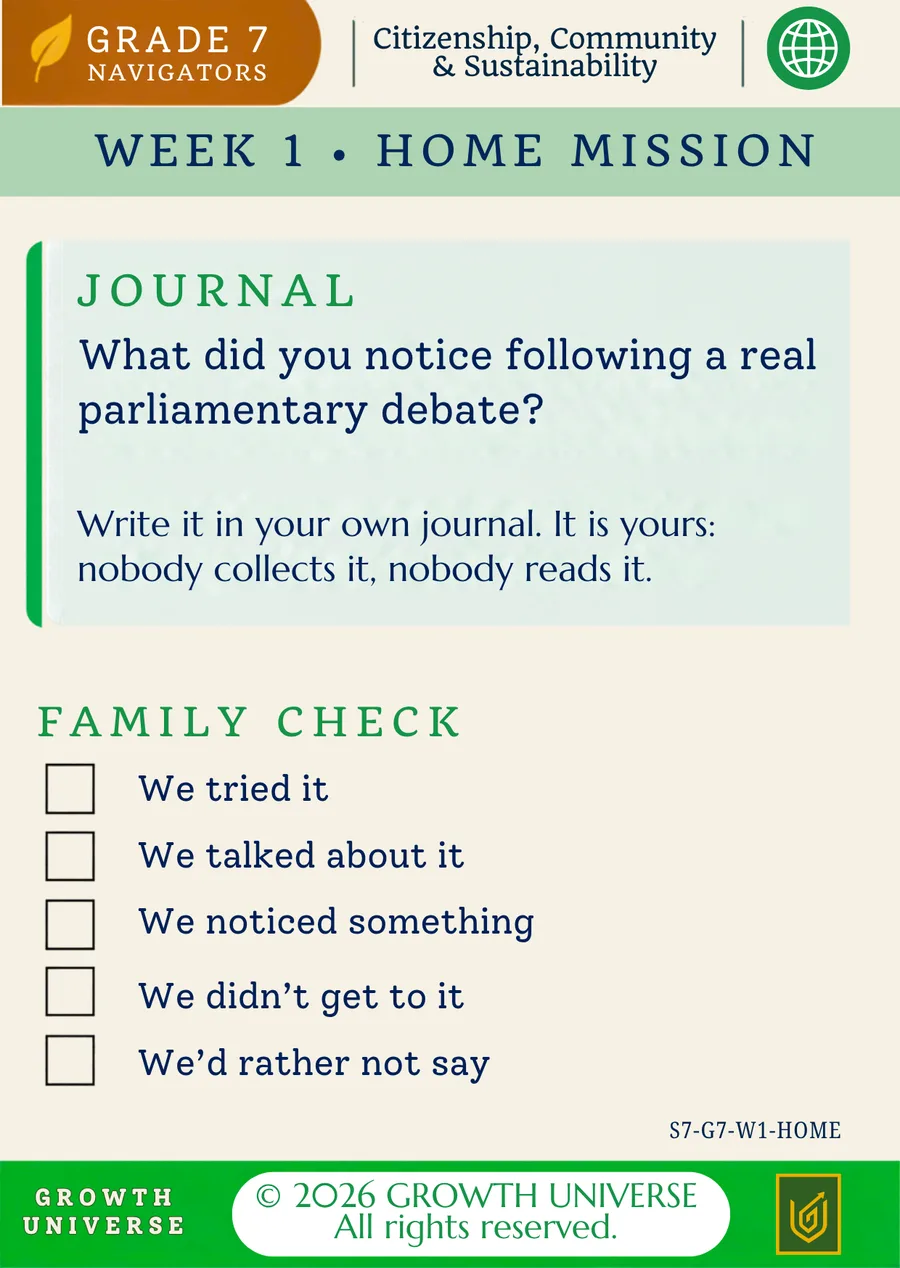
One Home Mission card, in a mission envelope. The mission takes about five to fifteen minutes.
Each month
The Parent Guide for the dimension your child is learning that month.
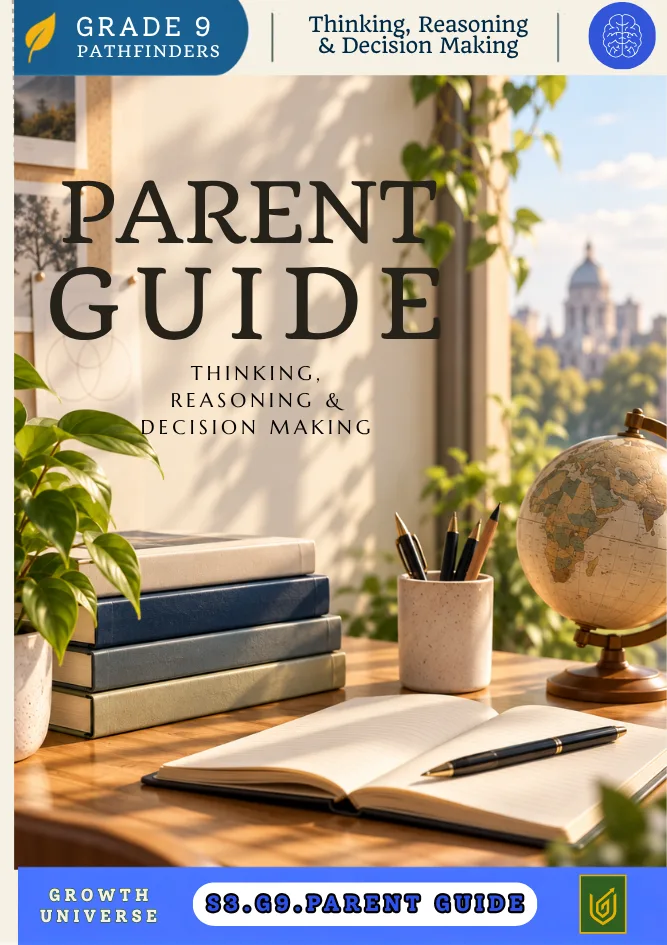
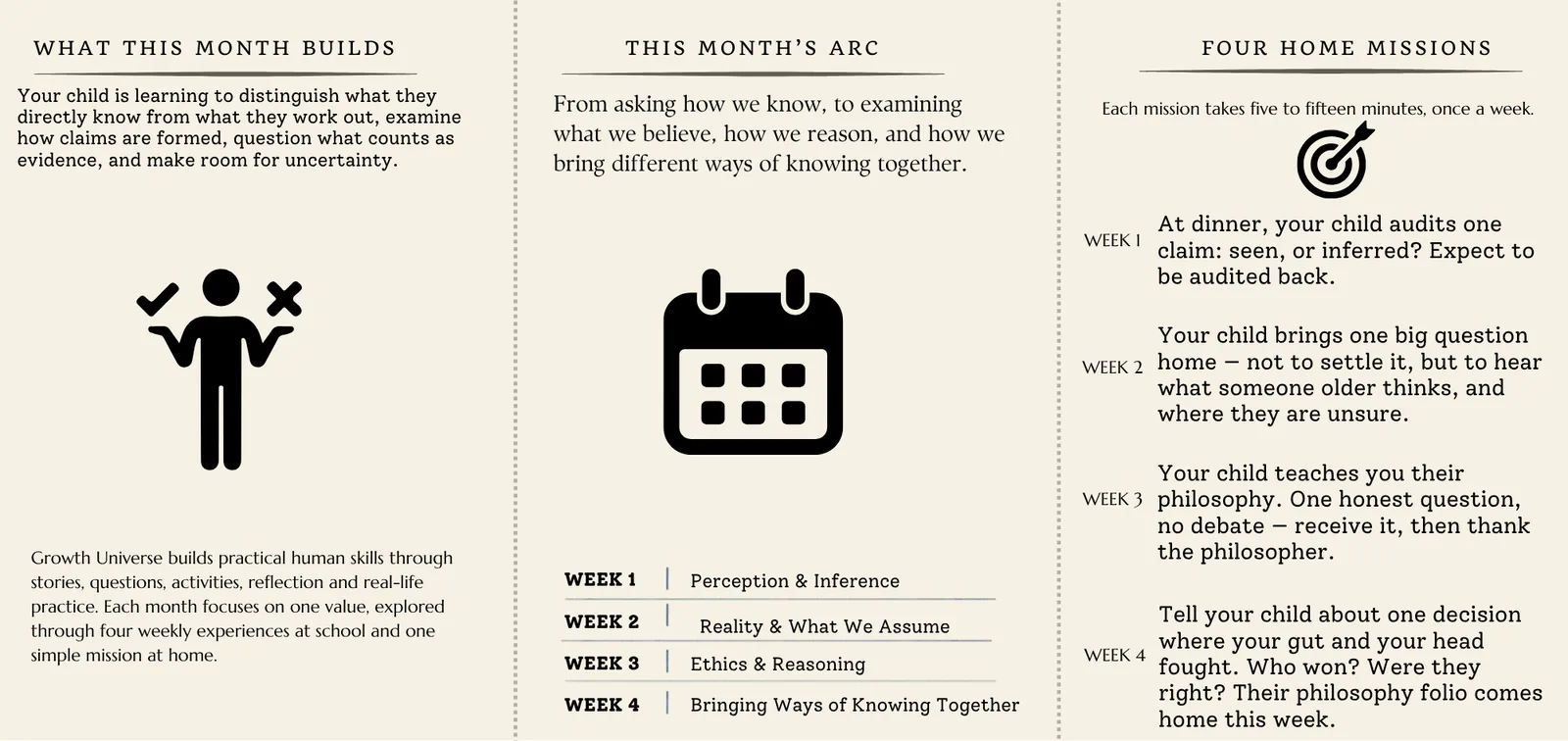
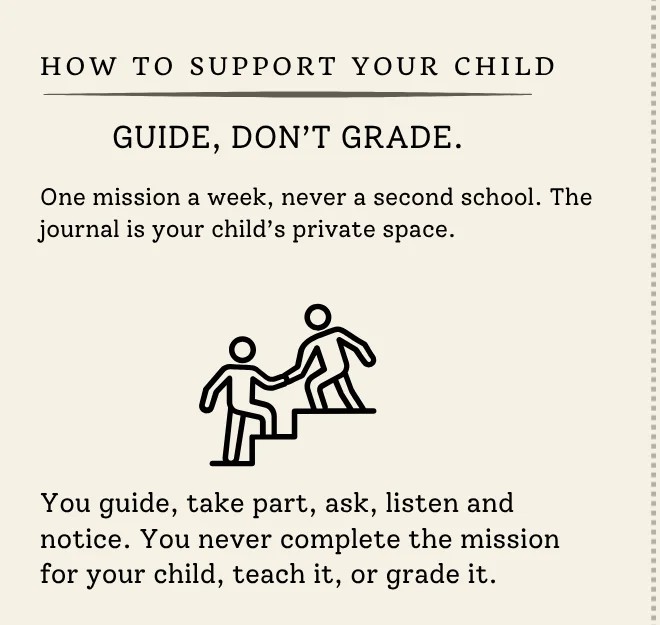

You don't need to become your child's teacher.
Growth Universe gives families simple ways to continue the conversation.
You guide, take part, ask, listen and notice. You never complete the mission for your child, teach it, or grade it.
- Guide, don't grade.
- One mission a week, never a second school.
- The journal is your child's private space.
Questions parents ask
Good questions, plain answers.
What ages is it for?
Grades 1 to 10, in four journeys: Seedlings (Grades 1–3), Explorers (Grades 4–5), Navigators (Grades 6–8) and Pathfinders (Grades 9–10).
Is this academic?
No. School teaches children how to read, calculate, remember, analyse and achieve. Growth Universe is for the questions life asks: understanding yourself, thinking when the answer isn't obvious, handling money, staying safe, finding your voice.
How much time does it take? Is it more homework?
At school, one 40-minute session a week. At home, one Home Mission a week, which takes about five to fifteen minutes. It is not homework: one mission a week, never a second school. You guide, take part, ask, listen and notice; you never complete the mission for your child, teach it, or grade it. Nothing has to be sent back.
Is it religious?
No. Growth Universe teaches about India's knowledge traditions — its philosophy, stories, sciences and practices — as cultural and civilizational heritage, aligned with NEP 2020. GU never conducts prayer, worship, or religious instruction. Every learning objective is a universal human skill.
What does “Indian Knowledge Systems” mean?
India's rich intellectual, philosophical and knowledge traditions. These traditions have long explored questions that remain deeply relevant to growing human beings: How should I live? How do I know what I know? What is my responsibility to others? We bring these questions into conversation with the world children inhabit today.
How is personal safety taught?
Children develop age-appropriate understanding of personal safety, body awareness, boundaries, consent, trusted adults, relationships and seeking help. As children grow, the conversation grows with them. Safety is not fear. It is awareness, agency and knowing what to do.
How is AI covered?
Children learn to understand attention, digital identity, privacy, online behaviour, information, misinformation, screen habits, algorithms and emerging technologies, including AI. The goal is not to keep children away from technology. It is to help them become intelligent users of it.
How is my child's progress understood, and what do parents see?
We don't score a child's character. We observe development, and help families notice what is emerging, what is strengthening and what can be practised next. You receive a view of what your child is learning, home experiences, reflection prompts and age-appropriate progress updates. Your child's journal stays private. Read the privacy page