The Programme
Education for the human being, not just the student.
School teaches children how to read, calculate, remember, analyse and achieve.
But life asks different questions.
Nine questions life asks
These are not extracurricular questions. They are life questions.
Growth Universe is a structured life-skills education system for Grades 1–10, designed to help children develop the wisdom, character, capabilities and sense of contribution they need to navigate life consciously.
- 01Can you understand yourself?
- 02Can you think when the answer isn't obvious?
- 03Can you make a difficult choice?
- 04Can you handle money?
- 05Can you protect yourself?
- 06Can you navigate technology and AI?
- 07Can you speak, lead and listen?
- 08Can you live with people who are different from you?
- 09Can you contribute to something larger than yourself?
Eight dimensions. One whole human being.
One child. Many dimensions of growth.
A child does not grow in subjects. They grow in eight ways, and Growth Universe brings them together into one progressive developmental journey. Pick one.
A child grows emotionally
Wellbeing & Inner Strength
Know yourself. Build your inner foundation.
From reaction → to regulation.
From uncertainty → to inner strength.
Children learn to understand emotions, develop self-awareness, regulate themselves, build resilience and care for their wellbeing.
The journey grows with the child — from recognising feelings and expressing them safely to navigating stress, identity, relationships and emotional complexity.
A child grows physically
Personal Safety & Healthy Relationships
Know your body. Know your boundaries. Know your worth.
Safety is not fear.
It is awareness, agency and knowing what to do.
Children develop age-appropriate understanding of personal safety, body awareness, boundaries, consent, trusted adults, relationships and seeking help.
As children grow, the conversation grows with them — helping them navigate relationships with greater awareness, responsibility and respect.
A child grows intellectually
Thinking, Reasoning & Decision Making
Don't just have an answer. Know how to think.
From information → to understanding.
From reaction → to reasoning.
From following → to choosing.
Children learn to observe, question, reason, identify patterns, examine assumptions, evaluate information and make thoughtful decisions.
Because the world will give them endless answers. What they need is the ability to ask: “How do I know?”
A child grows digitally
Digital Intelligence, AI & Responsible Technology
Live in a digital world without losing yourself in it.
Use technology.
Understand technology.
Question technology.
Create with technology.
Technology is no longer separate from childhood.
Children need to understand attention, digital identity, privacy, online behaviour, information, misinformation, screen habits, algorithms and emerging technologies — including AI.
The goal is not to keep children away from technology. It is to help them become intelligent users of it.
A child grows financially
Money & Entrepreneurship
Understand value. Build agency.
From spending → to understanding.
From dependence → to agency.
Money shapes choices, opportunities and independence.
Children gradually learn about needs and wants, saving, spending, earning, budgeting, value creation, entrepreneurship and responsible financial decision-making.
Not to turn children into miniature businesspeople. But to help them understand that money is a tool — and financial choices have consequences.
A child grows socially
Leadership & Life Design
Find your voice. Shape your direction.
It is: “Can I direct my own life?”
Leadership begins long before a title.
Children develop communication, listening, public speaking, collaboration, goal-setting, leadership and future-planning capabilities.
They learn to articulate ideas, work with others, take responsibility and think intentionally about the life they want to build.
Because the ultimate leadership question is not: “How many people follow me?”
A child grows civically
Citizenship, Community & Sustainability
Understand that you belong to something larger than yourself.
It begins with how we treat the world we already share.
Children explore community, responsibility, citizenship, ethical leadership, sustainability and the impact of their choices on the world around them.
They learn that public spaces, natural resources, communities and societies do not simply belong to somebody else. They belong to all of us.
Citizenship begins long before adulthood.
A child grows humanly
Equality & Human Dignity
See the human being before the label.
It is one where everyone can belong.
Children explore equality, inclusion, dignity, gender sensitivity, fairness, difference and respect.
They learn that treating people equally does not always mean treating everyone identically. It means recognising the dignity of every human being.
Difference does not diminish dignity.
And a mature society is not one where everyone is the same.
Four foundations of human development
What are we ultimately trying to develop?
The eight dimensions tell us where growth happens. But Growth Universe is built around a deeper question. Our answer is fourfold.
Wisdom
See deeply.
Question. Understand. Discern.
Character
Stand firmly.
Integrity. Responsibility. Respect.
Capabilities
Act effectively.
Think. Communicate. Decide. Create.
Contribution
Give meaningfully.
Community. Citizenship. Service. Sustainability.
The journey changes as the child changes
Four journeys. One child, growing.
A journey is not a level and not a label. It is the stage of growth a child is in — and Growth Universe meets them there.
Discover.
Seedlings · Grades 1–3 · The first journey.
Children learn to notice and name — a feeling, a choice, a fair thing, a safe person.
A Seedling learns by doing, touching, moving and telling.
Big ideas arrive in small, concrete moments — a story, a game, a picture, a feeling face.
At this stage, growth looks like this
A child can name what is happening — and say one thing they can do about it.
- Notice it.
- Name it.
- Know one thing to do.
Understand.
Explorers · Grades 4–5 · The second journey.
Children move from naming to explaining — why something happens, and what follows from a choice.
An Explorer starts asking “Why?” and expects a real answer.
They test ideas against consequences, compare choices and begin to give reasons of their own.
At this stage, growth looks like this
A child can answer, give a reason, and use the idea once in a real situation.
- Ask why.
- Give a reason.
- Try it once.
Lead.
Pathfinders · Grades 9–10 · The fourth journey.
Students examine evidence, make their own judgments and take responsibility for where they are heading.
A Pathfinder is no longer only finding the way. They are choosing it.
They work with real evidence, real audiences and real decisions about their future.
At this stage, growth looks like this
A student can name the idea, show the evidence, put it to use — and recognise where its limits lie.
- Examine the evidence.
- Choose your direction.
- Know its limits.
The journey deepens. The dimensions remain.
A Seedling and a Pathfinder may explore the same dimension of growth. But they do not encounter it in the same way.
How it is taught
Learning by experience.
Growth Universe is built around experiential learning. Each session is a 40-minute experience. Children don't simply listen to an idea and move on.
- They encounter it.
- They try it.
- They question it.
- They reflect on it.
- And then they take it into their lives.
Learn it. Experience it. Reflect on it. Live it.
Because a value becomes meaningful when a child has had the chance to practise it.
Real examples from four dimensions
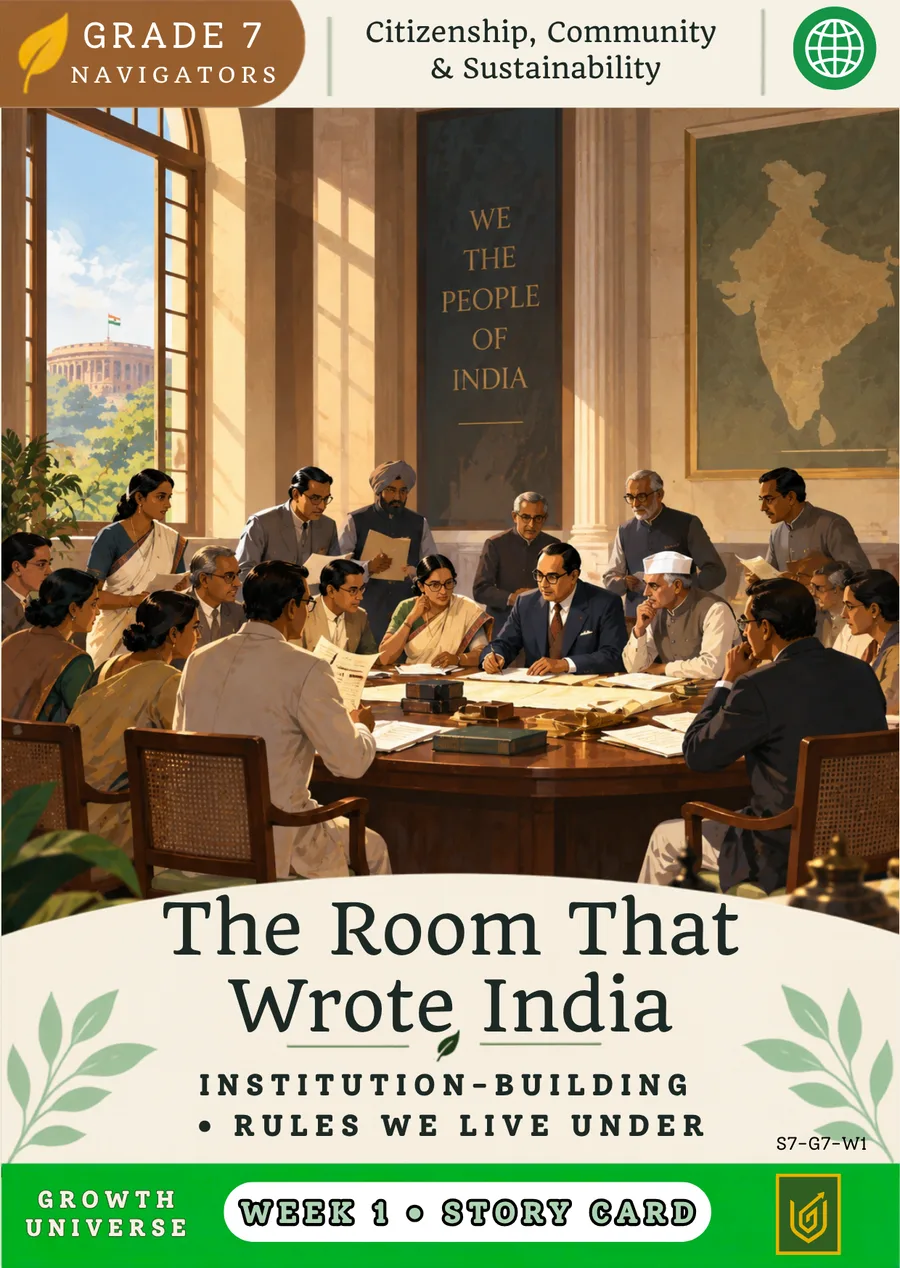
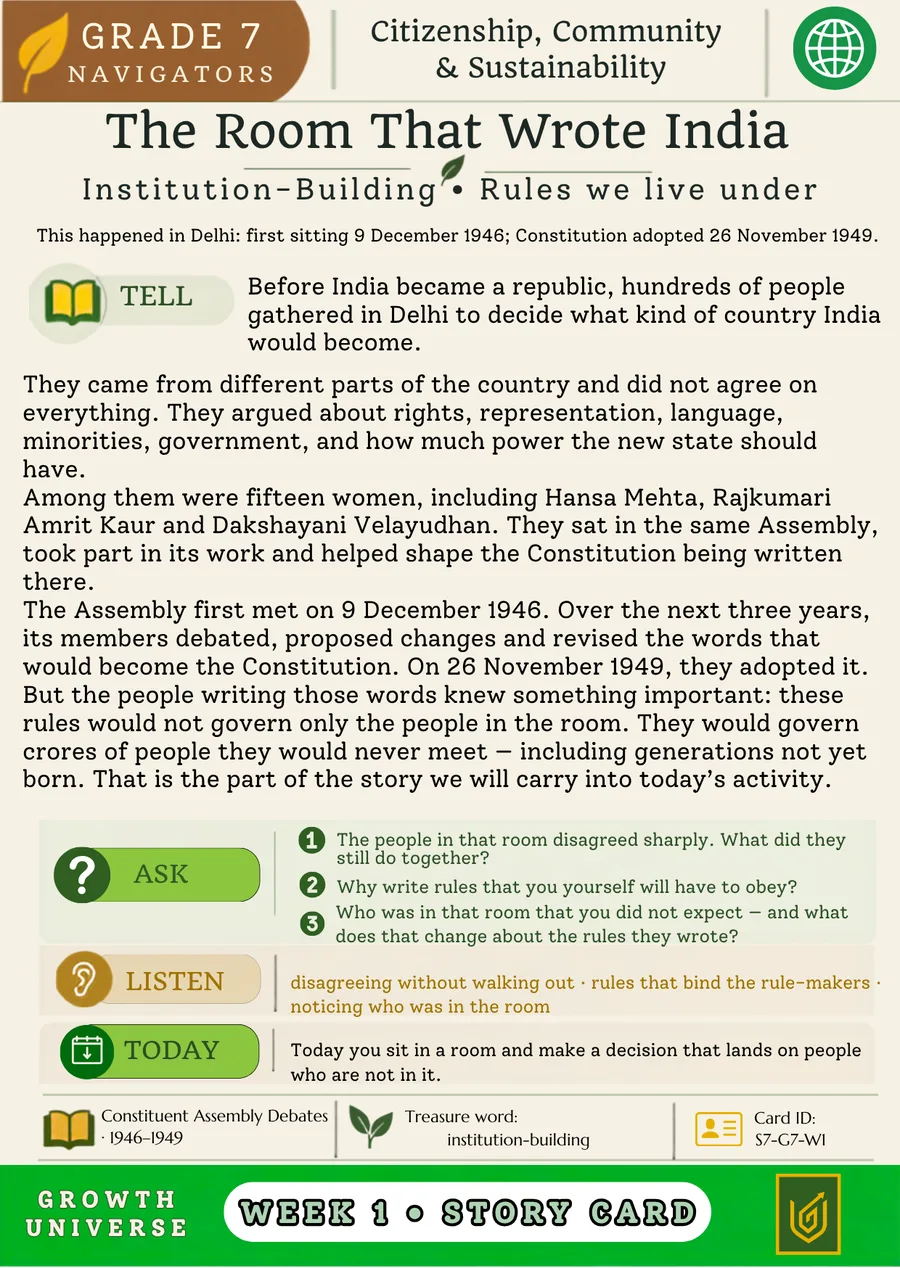
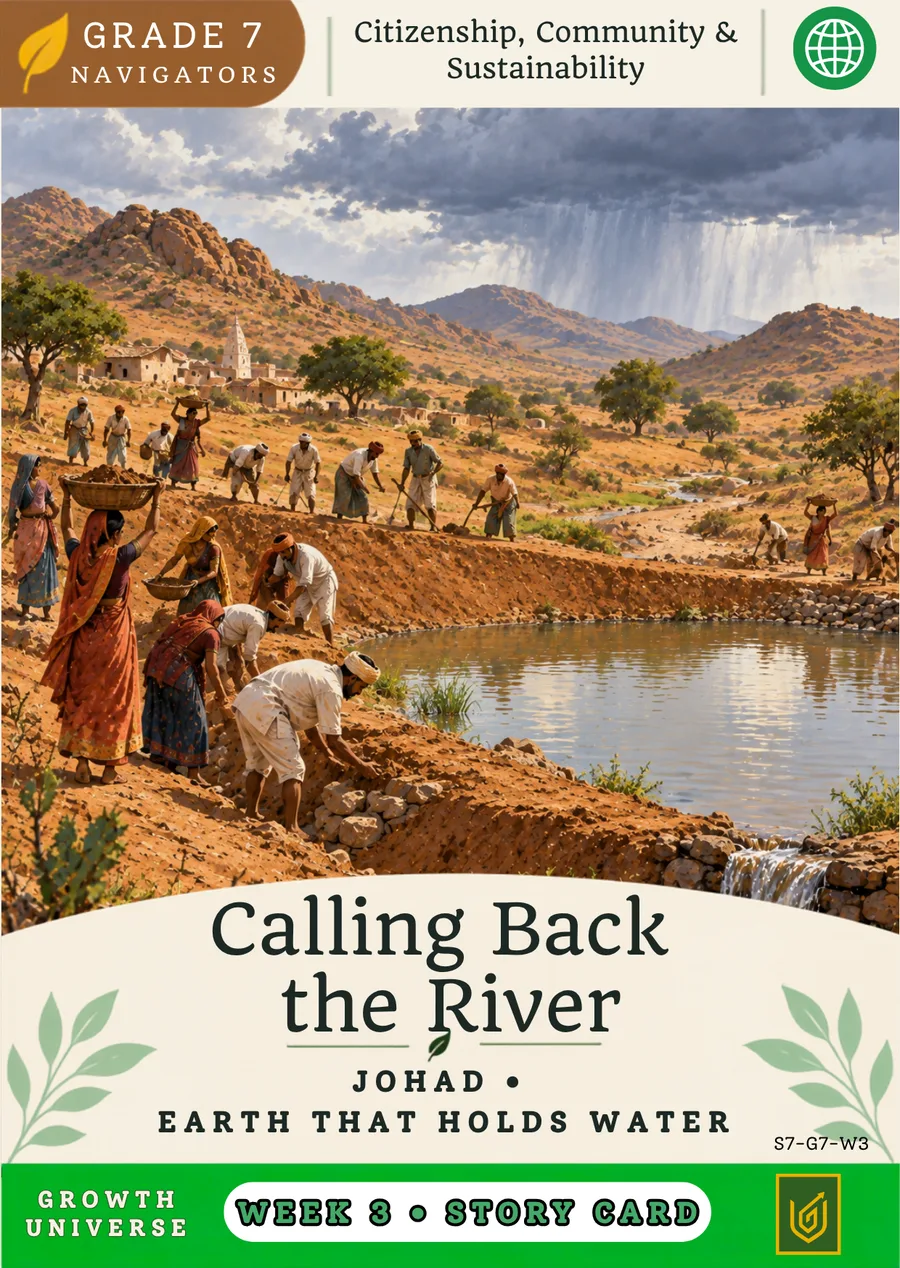
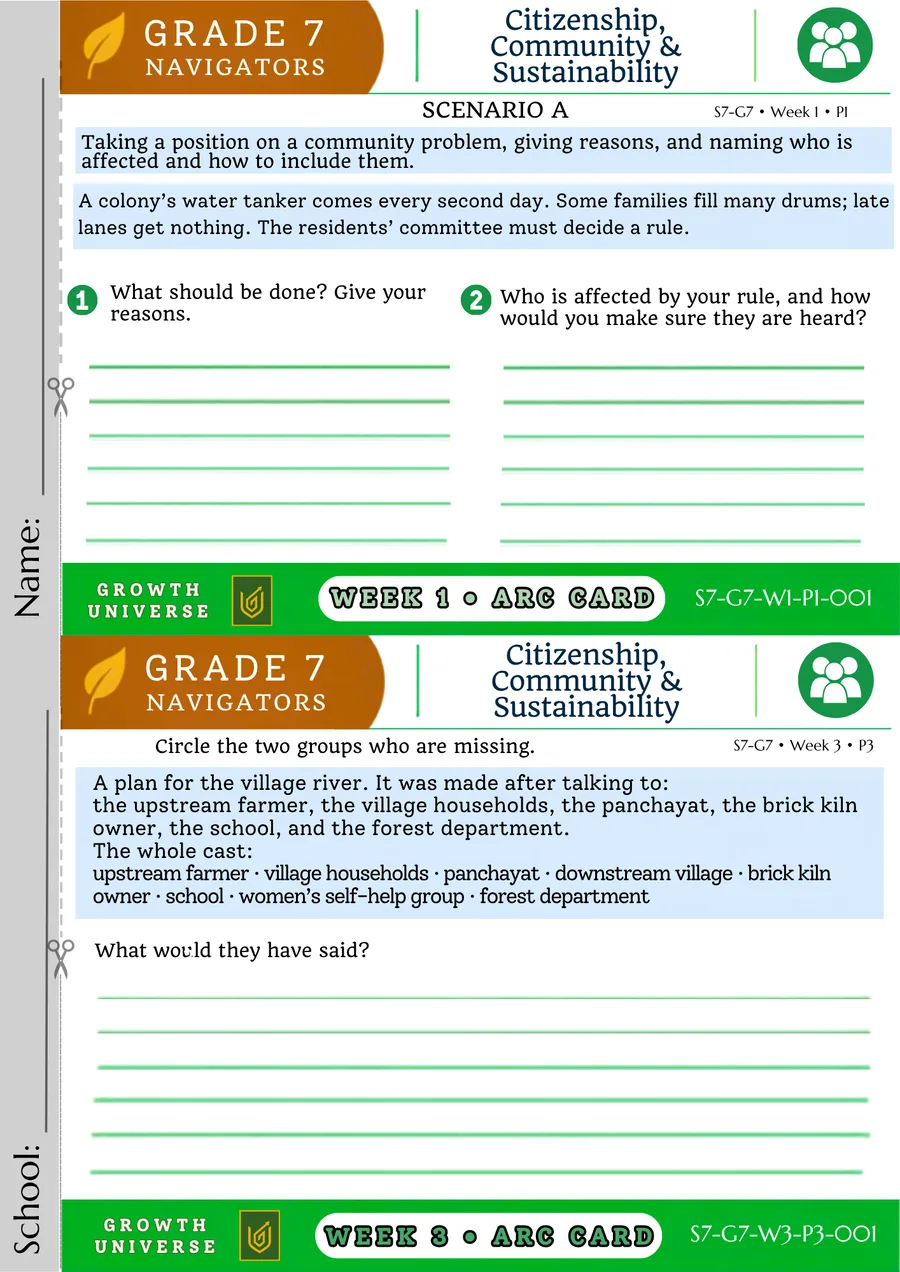
Two Story Cards from the month. The front sets the scene; the back tells the story, asks three questions and sets up the day's activity.
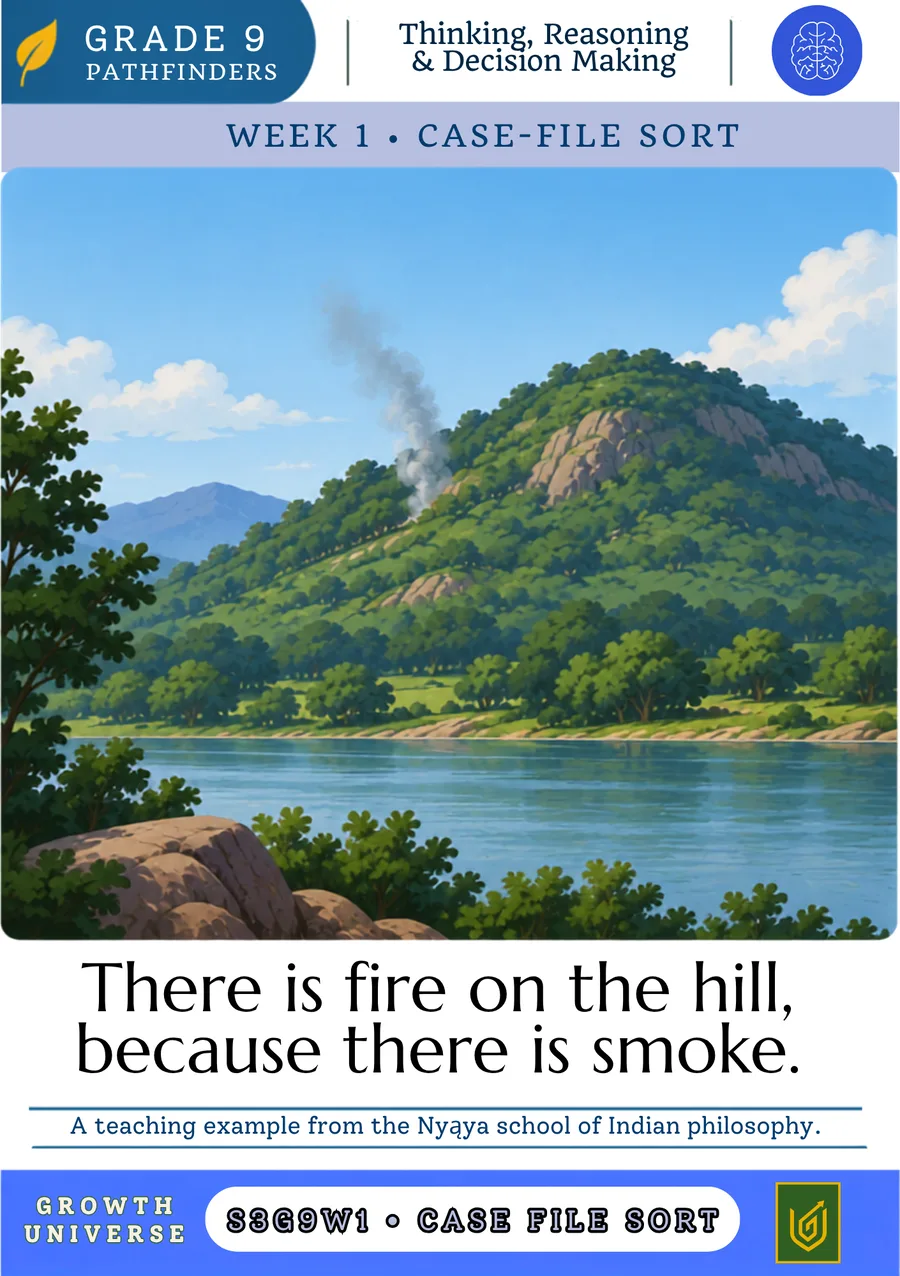
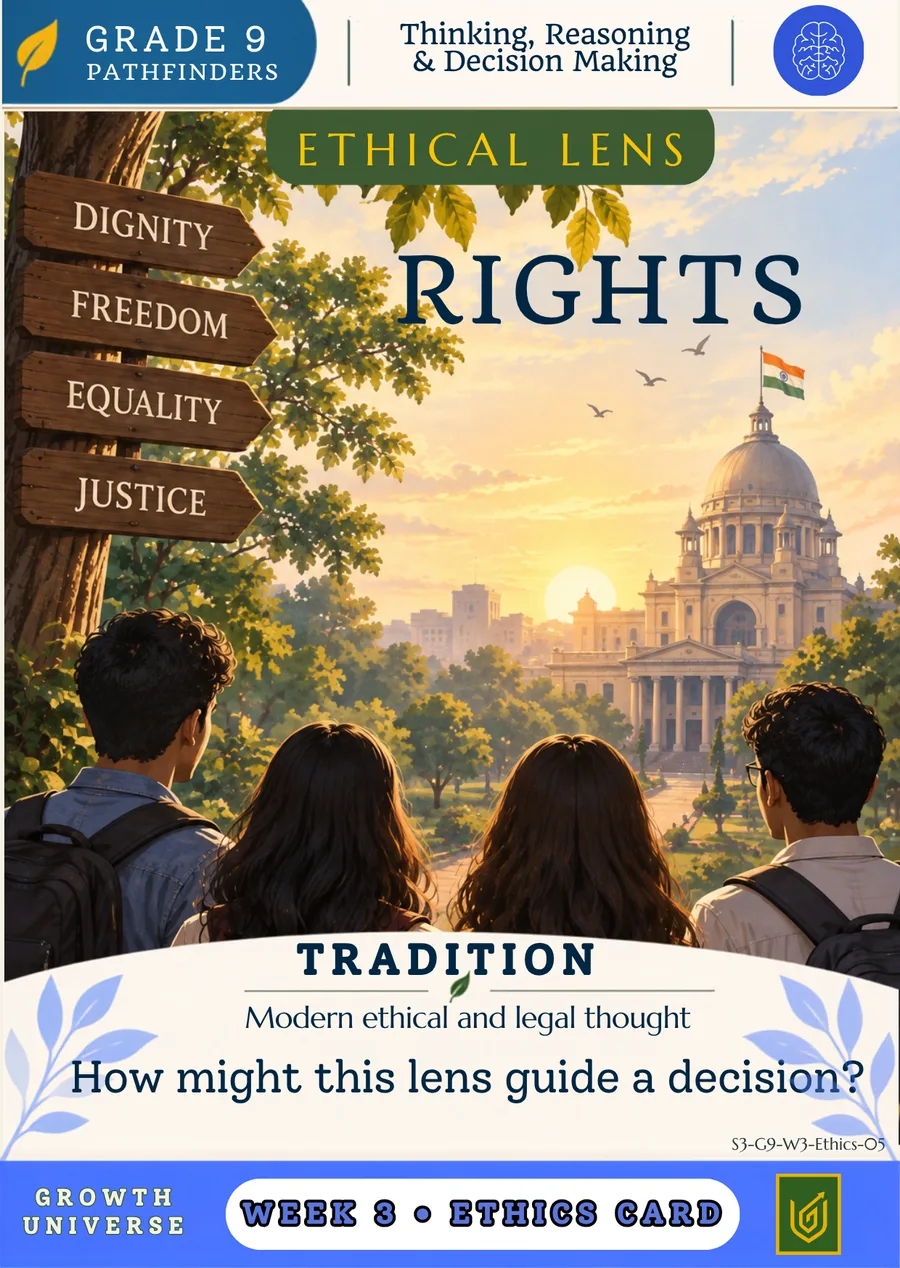
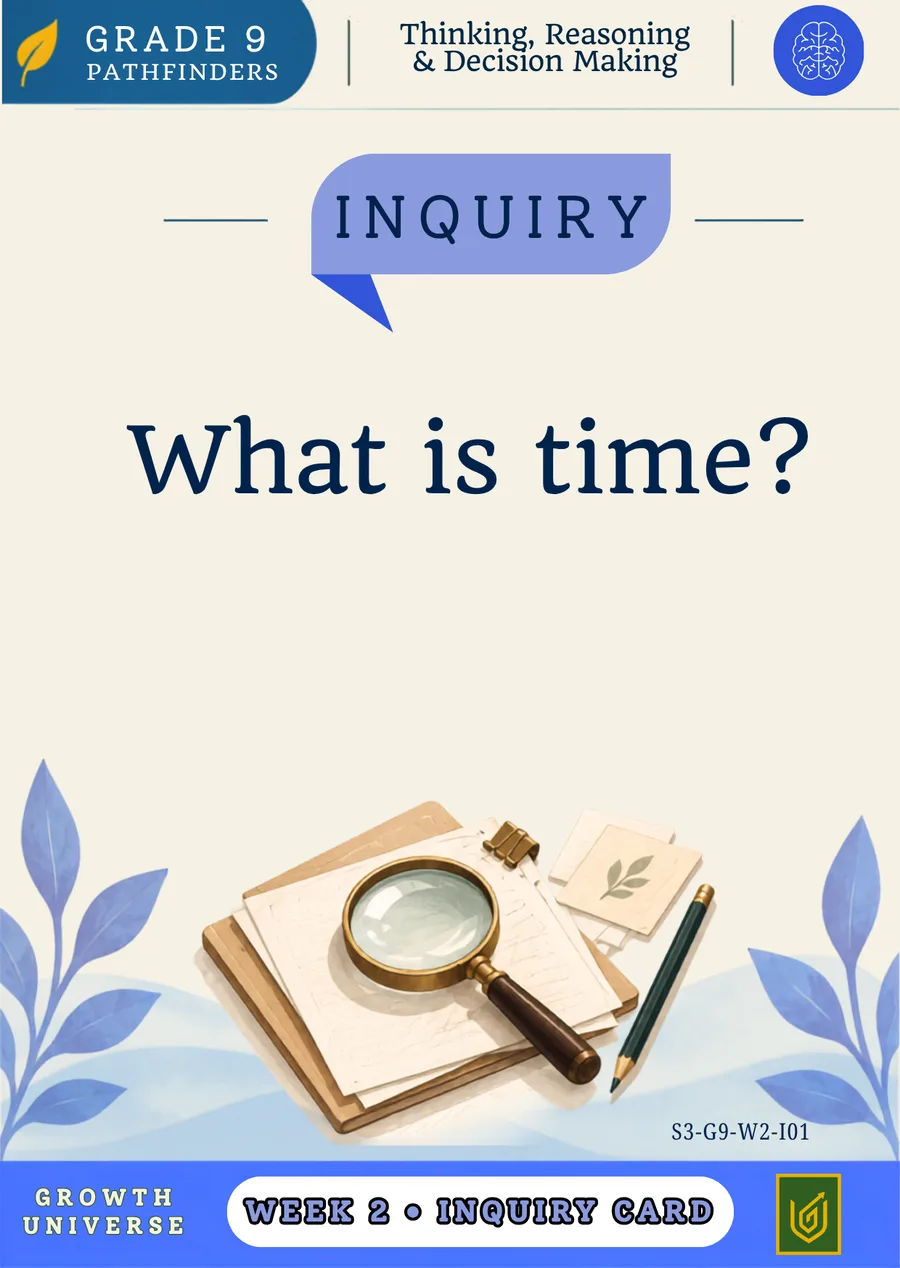
A case-file card, an Ethics card and an Inquiry card. Students sort, test and question what they think they know.
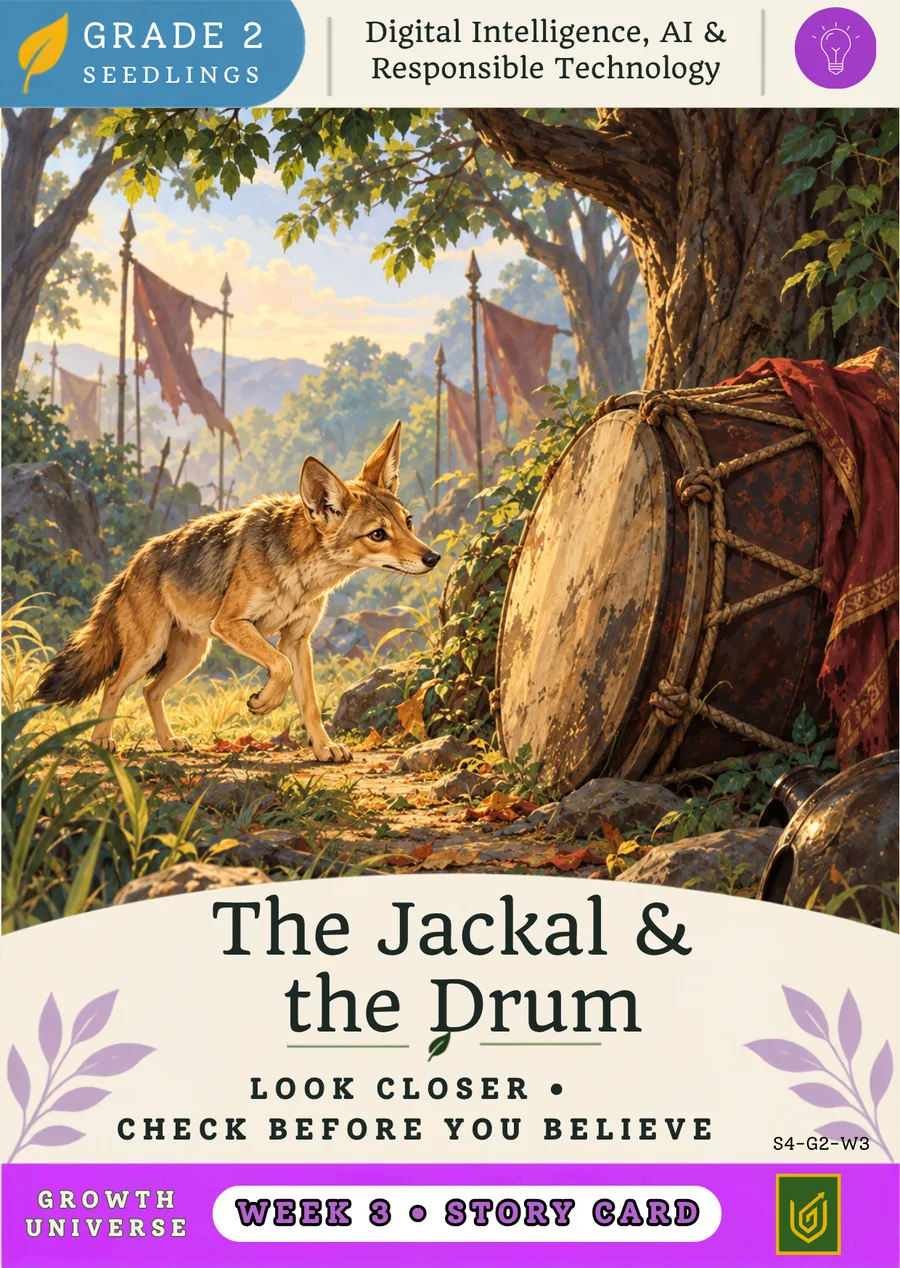
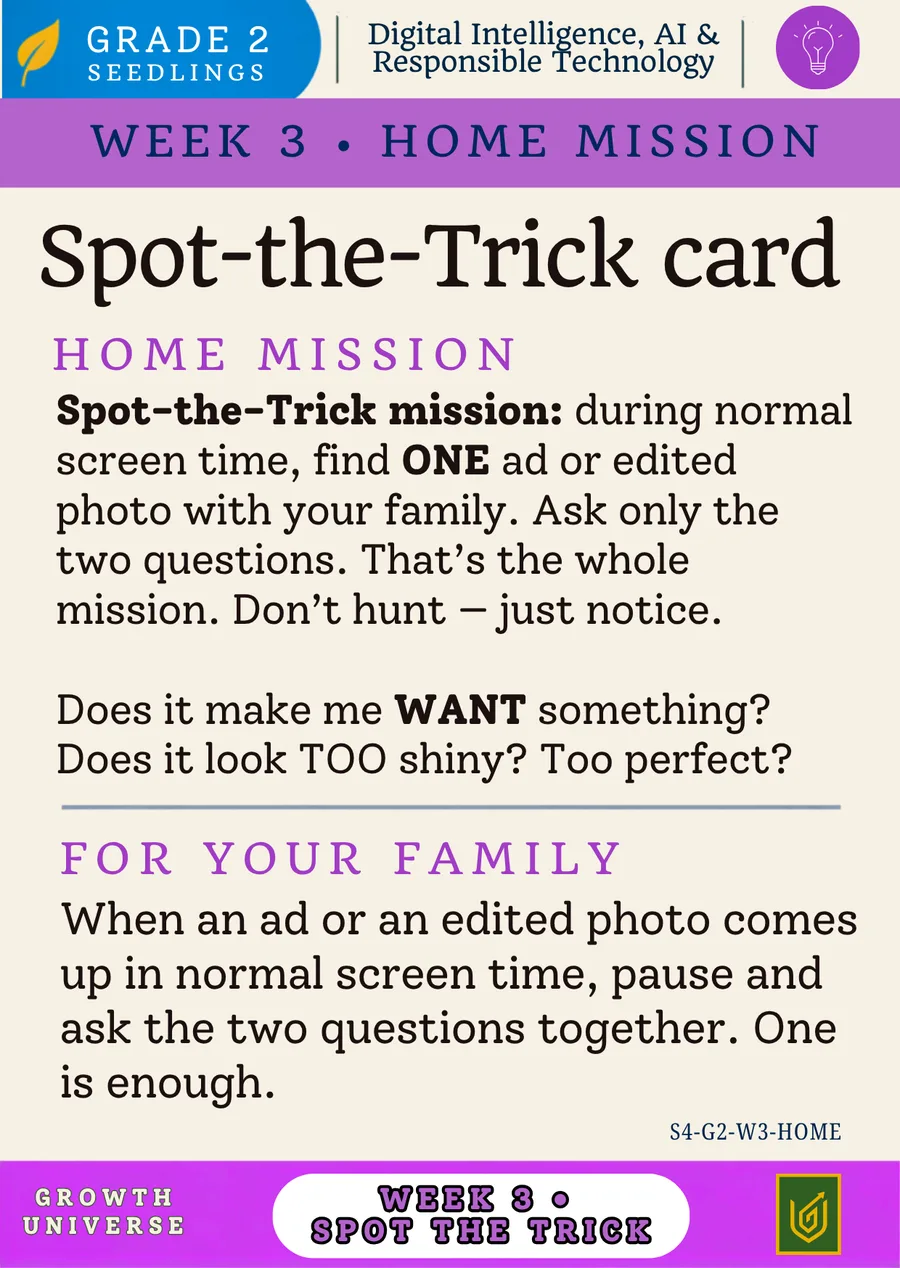
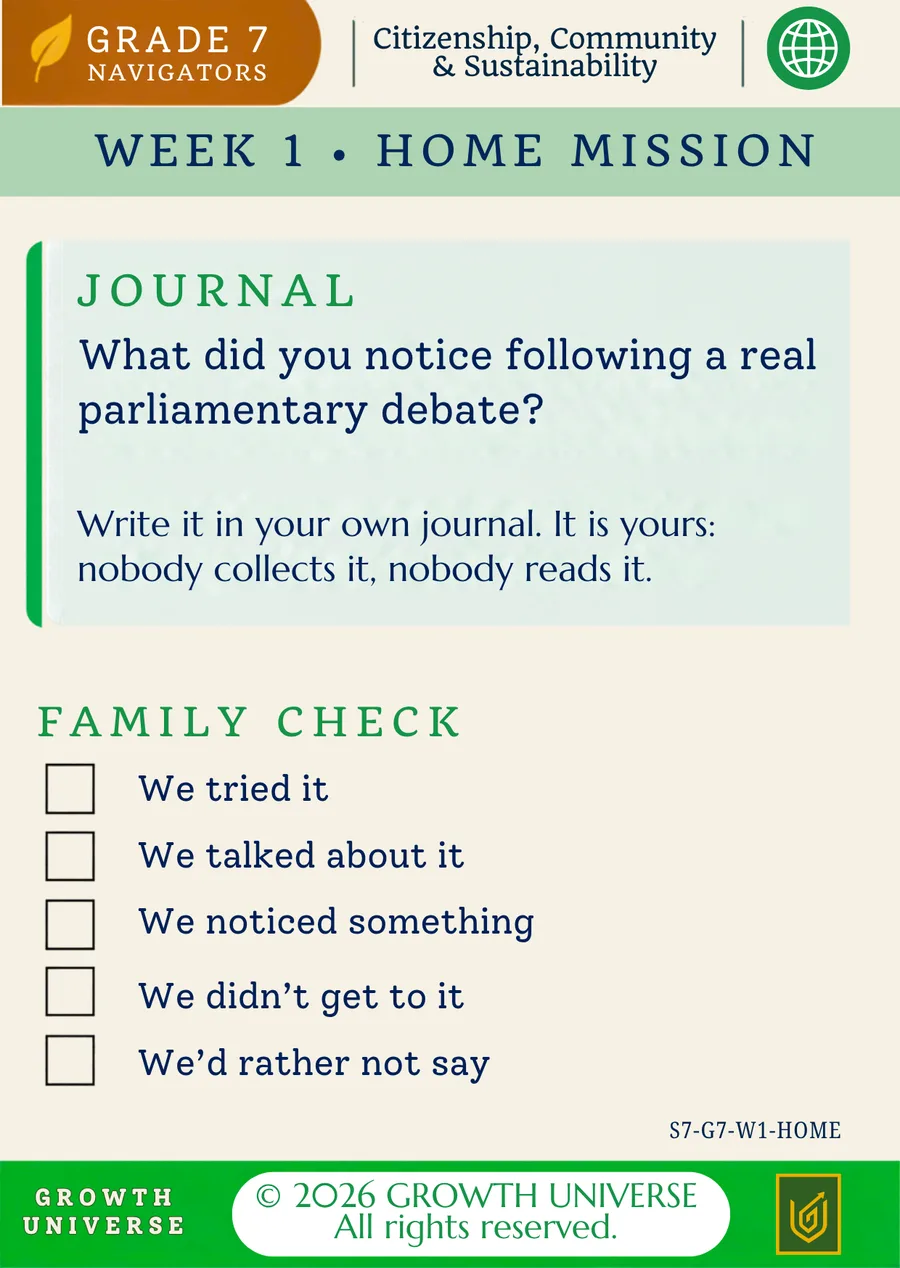
A Story Card and its Home Mission: spot one advert or edited photo together, and ask two questions.
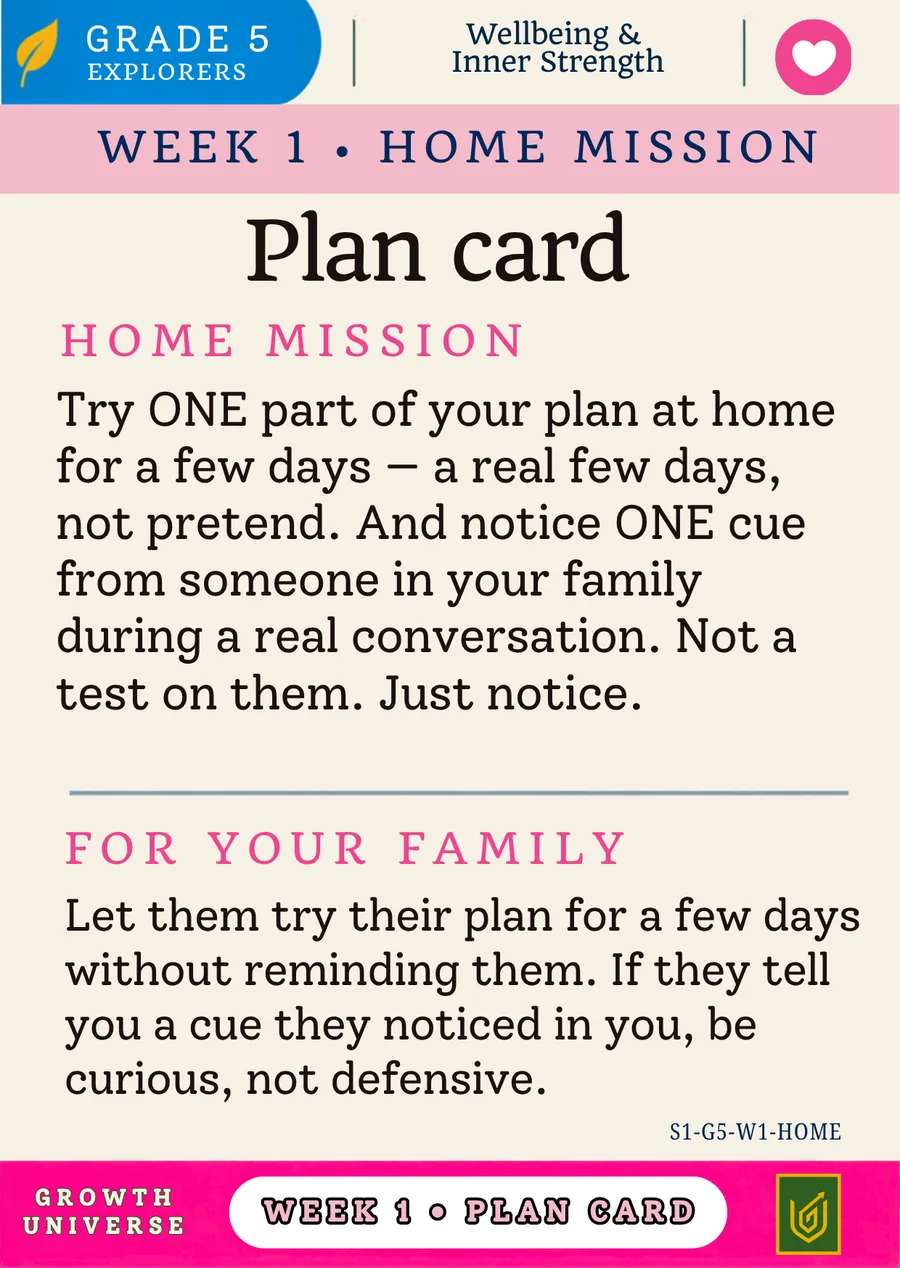
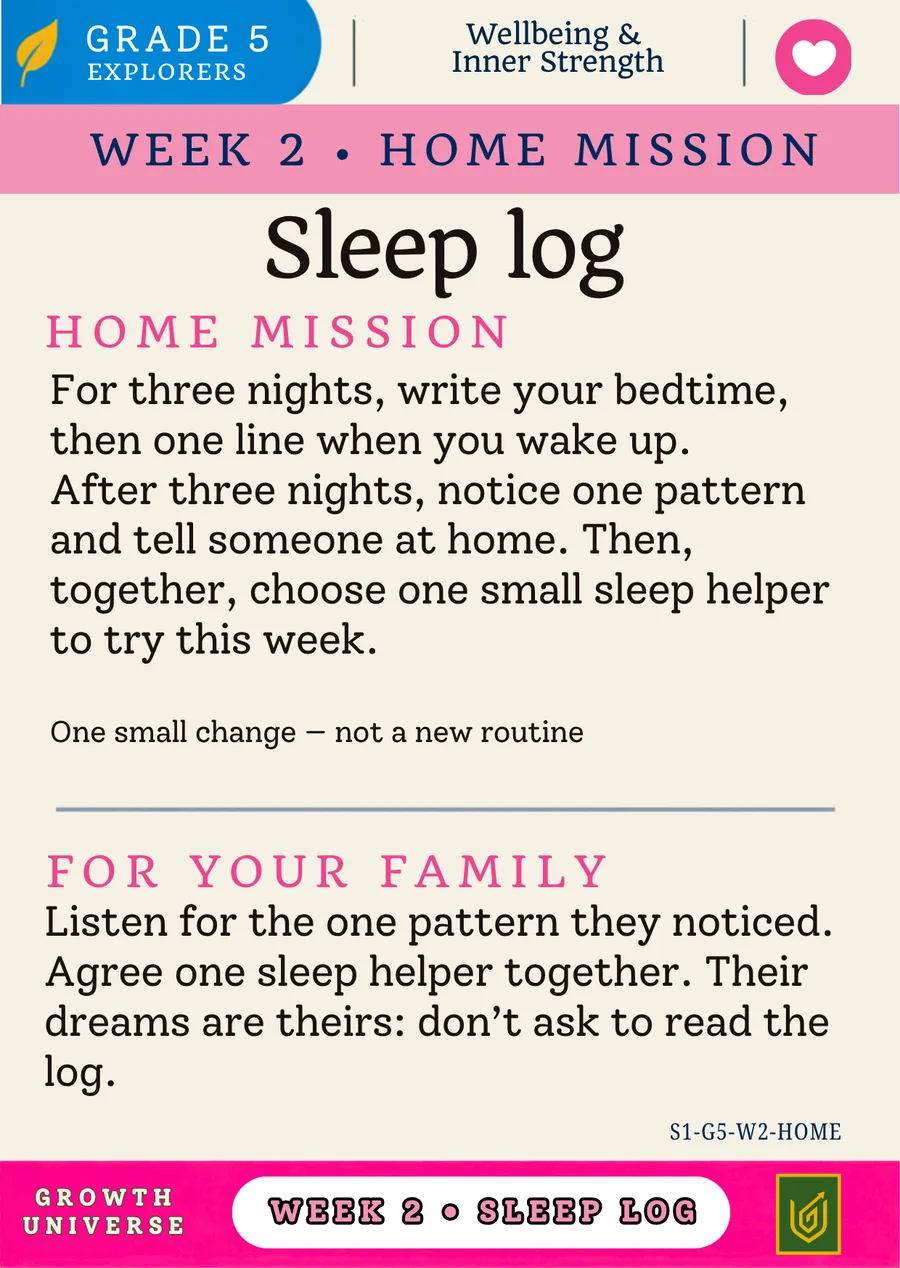
Two Home Missions: try one part of your own practice plan, and keep a three-night sleep log.
Three spaces of growth
School → Home → Self
Growth cannot belong to the classroom alone. Growth Universe connects three environments.
-
School
Structured experiences.
Coach-facilitated sessions bring the curriculum into school through activities, games, puzzles, discussions, reflection and collaborative experiences.
-
Home
Real-world application.
Home experiences extend learning beyond school and give families opportunities to practise ideas through everyday life.
-
Self
Personal reflection.
Journaling, reflection and individual challenges help children gradually become observers of their own choices, emotions, habits and growth.
What is introduced at school can be experienced at home. What is experienced can be reflected upon. What is reflected upon can become part of the child.
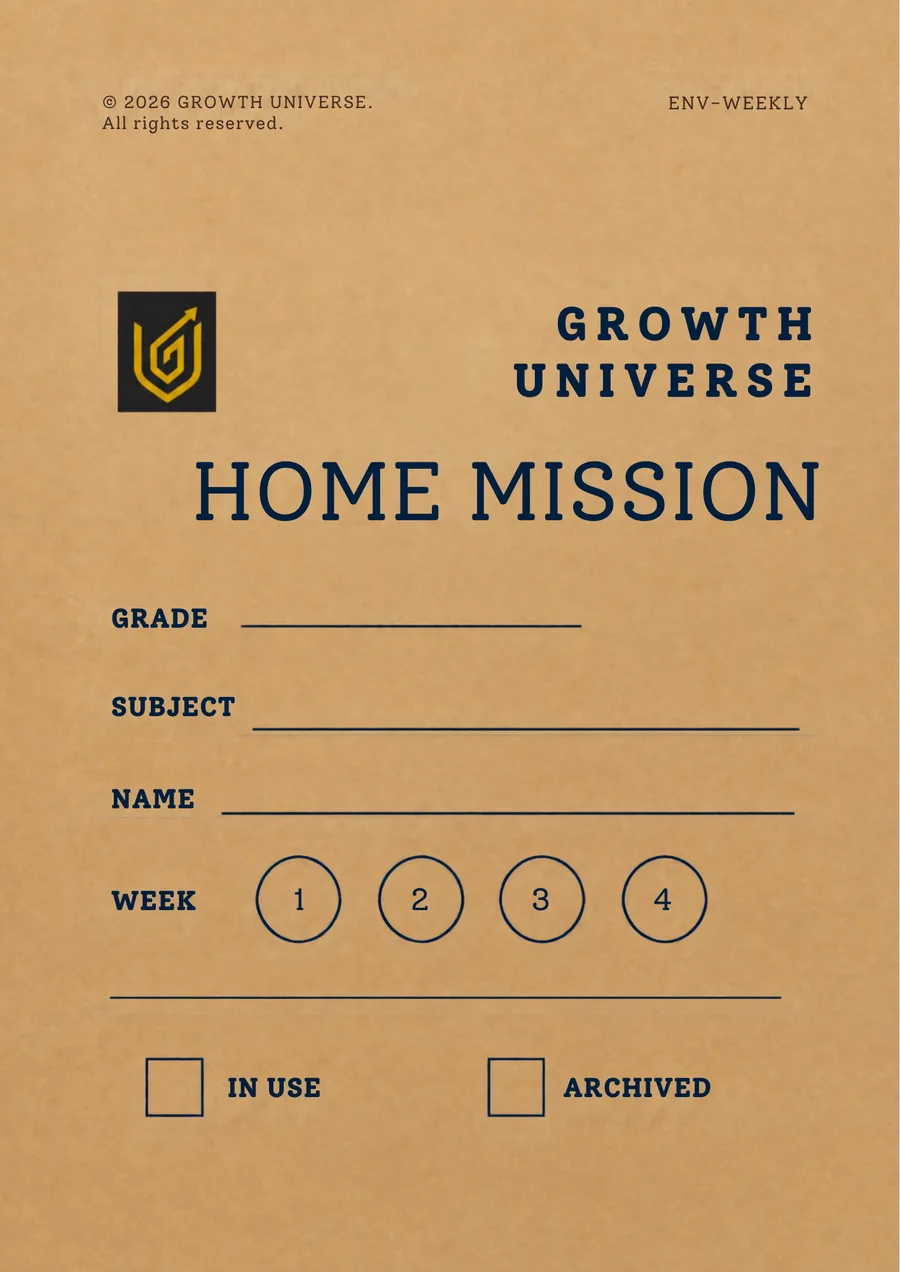
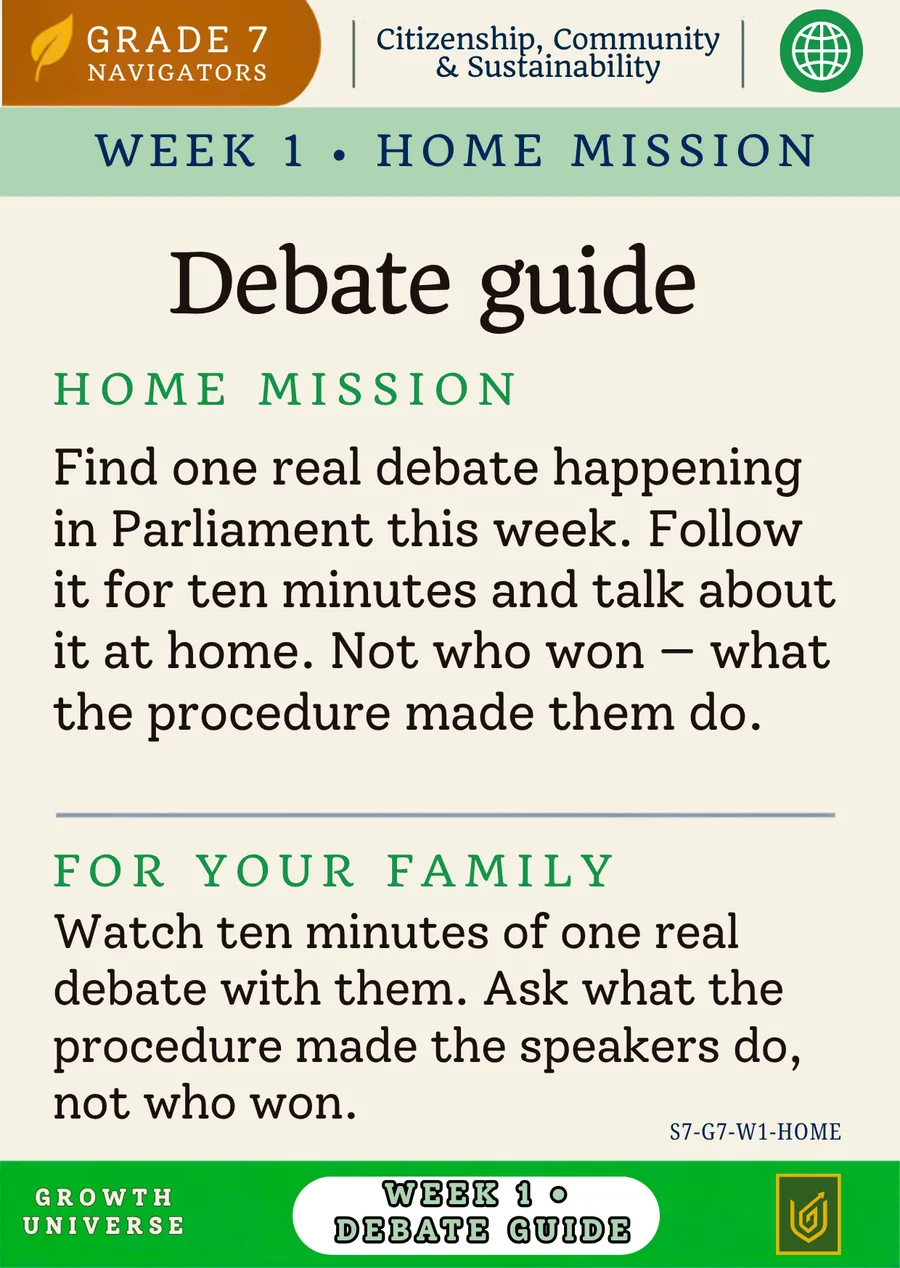
What goes home each week
Where it comes from
Rooted in Indian Knowledge Systems.
Growth Universe draws from Indian Knowledge Systems (IKS) and India's rich intellectual, philosophical and knowledge traditions.
These traditions have long explored questions that remain deeply relevant to growing human beings
- How should I live?
- How do I know what I know?
- What is my responsibility to others?
- How should I respond to difficulty?
- What does it mean to live a meaningful life?
We bring these questions into conversation with the world children inhabit today
- Technology
- AI
- Money
- Relationships
- Identity
- Citizenship
- The future
The goal is not to make children memorise ancient ideas.
It is to give them ideas worth thinking with.
How growth is understood
Three windows into growth.
We don't score a child's character. We observe development.
Facilitators use structured observation and developmental tools to understand how students are applying what they learn.
Sees the cohort.
The school sees the journey
A meaningful picture of how the programme is being experienced and where the cohort is developing.
Not a child's private thoughts. Not a personality score.
- Engagement
- Participation
- Learning progression
- Programme-level insights
- Areas for support
Supports the child.
A window into your child's growth
Parents shouldn't have to guess what their child is learning beyond the textbook.
Not a report card on personality: we help families notice what is emerging, what is strengthening and what can be practised next.
- Home activities
- Conversation prompts
- Progress updates
- Ways to reinforce learning
Understands themselves.
The child gets to see their own journey
Growth Universe gives children opportunities to reflect on what they think, feel, choose and do.
As children grow older, they gradually become more involved in understanding their own development.
- Reflect on experiences.
- Record what they noticed.
- Set personal goals.
- Practise new skills.
- Return to ideas over time.
- See how their thinking changes.
The goal isn't to tell a child who they are.
It is to help them discover who they are becoming.
What does a Growth Universe child become?
Not a perfect child. Not an obedient child. Not simply a high-performing child.
A child who gradually learns to:
- Pausebefore reacting.
- Thinkbefore believing.
- Questionbefore accepting.
- Choosebefore following.
- Savebefore spending.
- Speakbefore shrinking.
- Set boundarieswithout losing empathy.
- Disagreewithout losing dignity.
- Use technologywithout surrendering attention.
- Leadwithout needing a title.
- Contributewithout needing applause.
And eventually—
direct their own life with wisdom, character, capability and purpose.
This is Growth Universe.
Structured Growth. Conscious Futures.
A life-skills education system for Grades 1–10.